Manufacturing process
From Formula to Finished Product
Ten steps from a project brief to a repeatable production program, with the decisions that matter moved to the front.
The path
A clear path from project brief to production
Every product is different, but the path is predictable. A clear process shows what information is needed, which decisions happen first and what has to be approved before production.
Most delays start with a decision made too late: a bottle that does not fit the line, a label material that fails, a formula more viscous than expected. The steps below move those questions earlier, when they are cheaper to solve.
Steps 1–5
Brief, formula, package and approval
The front half of the process decides how smooth the run will be.
01
Share the project brief
Product, intended use, formula status, package, expected order quantity, annual volume and target date. Regulatory requirements and required claims are identified here.
02
Determine the formula path
Transfer an existing formula confidentially, develop a new one, or use an approved private-label formula when that is the faster route.
03
Review package and components
Bottle, jug, pail, drum, closure, liner, seal, label and case pack are reviewed before the production plan is fixed.
04
Sample, test and approve
New formulas and manufacturing transfers may need samples, compatibility checks or a pilot before full production.
05
Source and stage materials
Approved raw materials, components and packaging are sourced or received and staged against the production schedule.
Steps 6–10
Blend, check, fill, kit and repeat
The back half turns an approved formula and package into finished, coded, shippable product.
01
Blend the batch
Liquid formulas are blended in the appropriate tank to a documented process, from 5 to 1,000 gallons.
02
Perform in-process checks
The batch is reviewed against the agreed criteria, such as appearance, pH, viscosity or density, before it moves forward.
03
Fill and finish
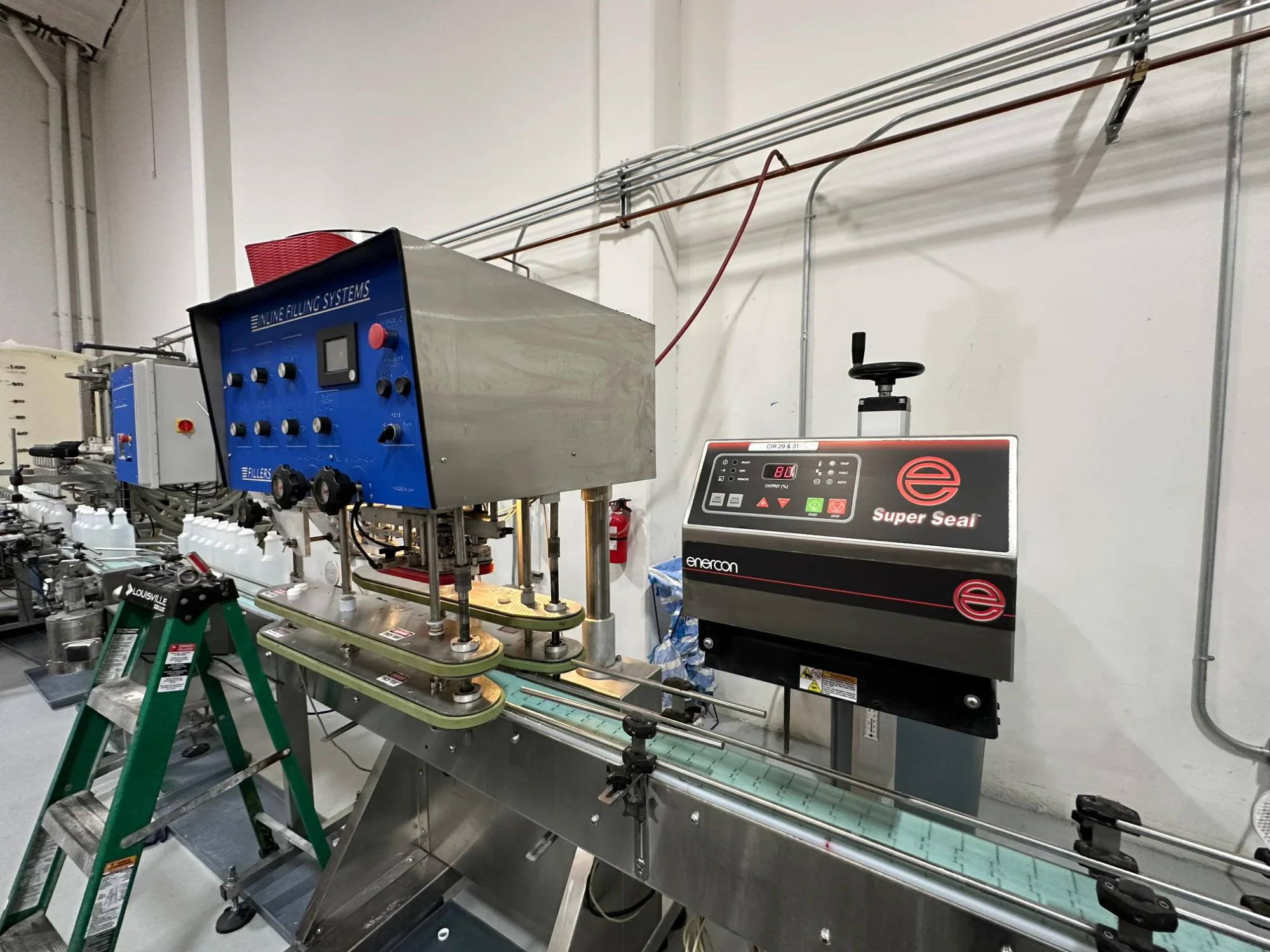
Filling from 4-ounce bottles to 55-gallon drums, with capping, induction sealing, label application and batch-code printing.
04
Kit and pack out
Kits, bundles, inserts and multipacks are assembled to the approved configuration, then cased for the distribution path.
05
Release, ship and repeat
The first run establishes a repeatable program. Reorder planning covers raw-material lead times, component availability and demand.
Why it works
A process designed to reduce surprises
Many delays begin with decisions made too late. A structured process moves those questions earlier, when a change is a conversation rather than a line stop.
Formula and package reviewed together before the first run
Approvals documented before materials are staged
In-process checks recorded, not assumed
First-run learning captured for the reorder
Start with a brief
Start with a project brief
Tell us the product, formula status, package and timing. We will map the steps that apply to your program.