Liquid Filling, Co-Packing & Contract Packaging Services
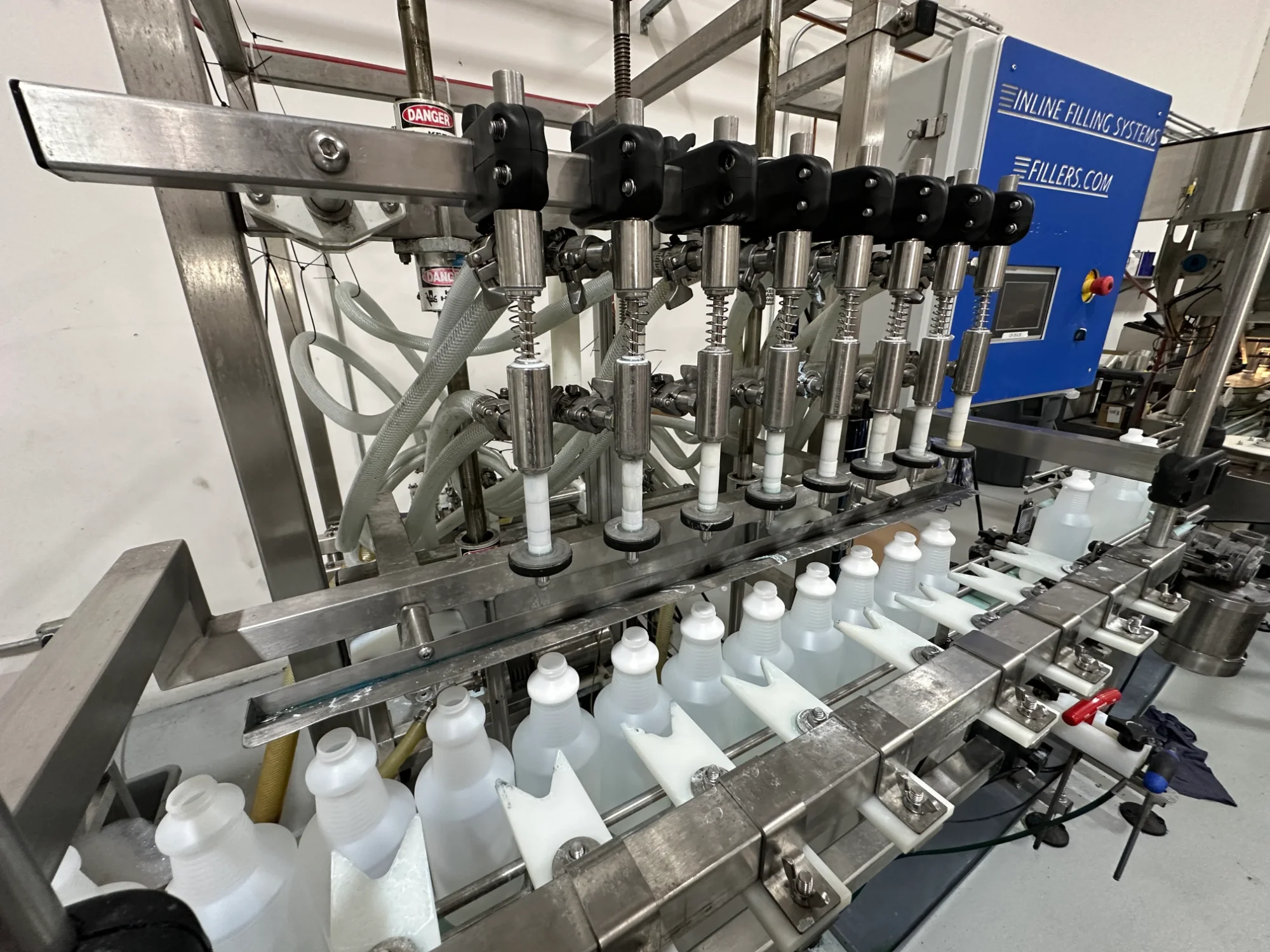
Liquid Filling from 4 Ounces to 55 Gallons
Filling can be part of a complete contract manufacturing program or the downstream step after a customer-owned formula, an Impackt blend or a private-label formula is ready for packaging.
The objective is not simply to dispense liquid into a container. It is to produce finished packaged goods that meet the brand's approved specification — filled, closed, sealed, labeled and coded before they leave the line.
The Package Is Part of the Manufacturing Plan
Before filling begins, the product and package need to work together. Container material, neck finish, closure, liner, induction seal, label dimensions and product viscosity can all affect line setup and finished-product performance.
We review the proposed container and closure before the first production run, especially for a new product or a new package. That review identifies compatibility, line-handling and sourcing issues early, while changes are still inexpensive.
Filling, capping, sealing, labeling and coding
Filling
Capping
Induction Sealing
Labels & Batch Codes
Small-Batch Filling and Scale-Up
Smaller brands often search for small-batch liquid filling, but batch size alone does not determine whether a project is economical. Line setup, cleaning, formula handling, package components and total unit count all affect project fit.
The practical minimum depends on the product, the package and the full production program — not on a single number. We discuss that openly during quoting so the first run and the tenth run make sense for the same line.
Filling for Private Label and Contract Manufacturing
Filling is most useful when it connects to the rest of the manufacturing path. A private-label customer may use an existing formula and have it blended, filled and labeled in one program. A contract-manufacturing customer may bring a proprietary formula and use Impackt for blending, filling and final pack-out.
A brand may also need filling plus kitting to create a multipack or ecommerce bundle. Because those steps sit under one roof, the package and the pack-out can be planned together.
Liquid Filling FAQs
What container sizes can Impackt fill?
The published range runs from 4-ounce bottles to 55-gallon drums. Specific package compatibility is reviewed before production.
Can you fill a product that another manufacturer blends?
Potentially. Customer-supplied bulk product or externally manufactured product goes through a project review covering documentation, material handling, compatibility and inbound logistics before acceptance.
Can you apply labels during filling?
Yes. Label application is integrated into the automated filling lines. Exact label formats and application requirements are reviewed with the package.
Do you provide induction sealing?
Yes. Induction sealing is part of the filling-line capability. Seal compatibility still depends on the container, closure and product.
Can filling be combined with kitting?
Yes, where the kit configuration fits the assembly capabilities. This is useful for multipacks, bundled products and ecommerce programs.